Dr. Megan Tanaka, MD Reproductive Endocrinology · Newton, MA
The Longest Month
For the patients in Dr. Megan Tanaka's care, thirty days can feel like a year. She built a practice around not letting them spend those days alone.
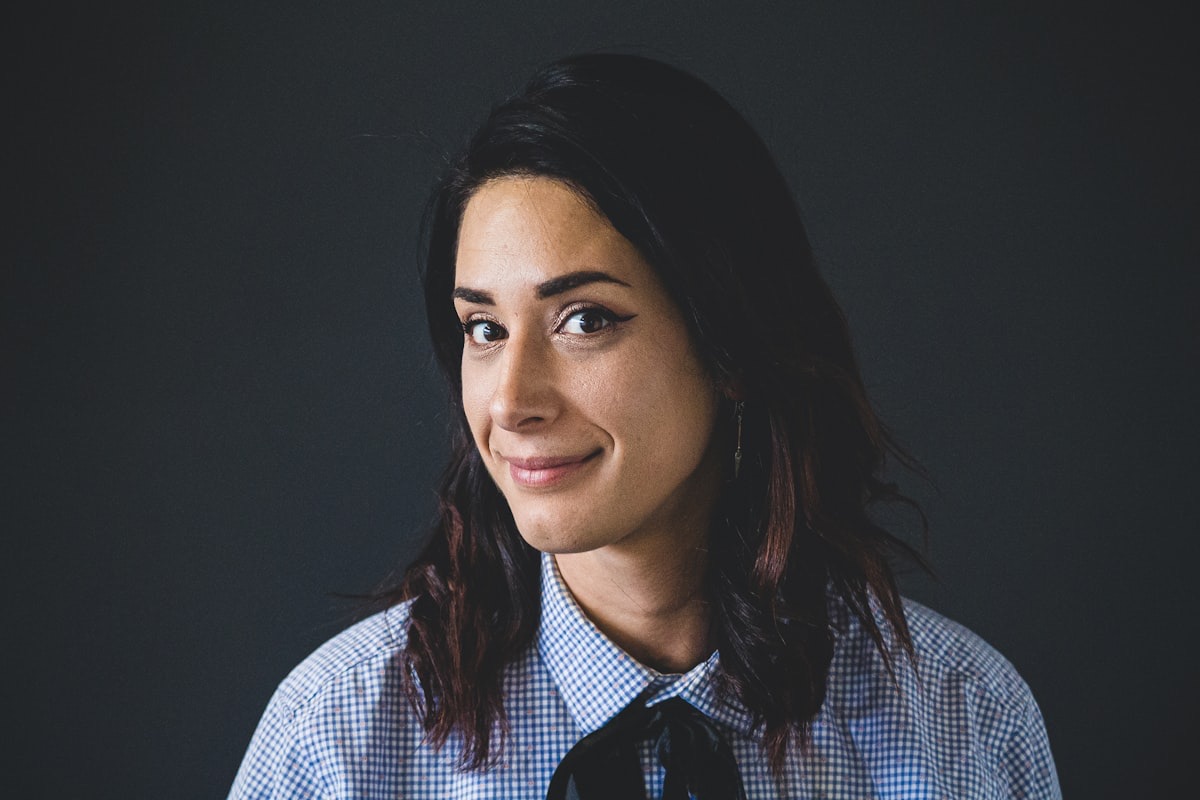
Dr. Tanaka at her practice in Newton, Massachusetts.
The call comes at eight in the morning, and Megan Tanaka already knows what it will say. She has been tracking this patient's cycle for three weeks, reviewing labs, adjusting the protocol once, then again. She has the blood work in front of her before she dials. The conversation will be three minutes and will determine what the next month looks like for the woman on the other end. Tanaka makes these calls herself. She has made them herself for thirteen years.
Fertility medicine moves in a rhythm that no other specialty shares. A cycle is roughly thirty days. Inside that window, the decision points are dense, the stakes are personal in a way that defies clinical language, and the patient is living every hour of it. "Most of medicine treats what's happening now," Tanaka says. "This field treats what someone is trying to become. It changes everything about how you have to show up."
The Work Between Visits
New England Fertility Partners is a two-physician practice. Tanaka and her partner see roughly four hundred patients a year, a deliberate cap that most larger clinics would consider inefficient. The tradeoff is continuity. When a patient starts a cycle with Tanaka, she stays with them — the morning monitoring, the retrieval, the transfer, the call afterward. She does not rotate off. There is no "covering physician you'll meet the day of your procedure."
The structure also means she is available between visits, which in fertility medicine is where most of the anxiety lives. The two-week wait between embryo transfer and pregnancy test is, by most patients' accounts, the hardest part of the process. Tanaka's practice schedules a midpoint check-in by phone during that window. It is not medically required. There is nothing to test, nothing to adjust. "But there's something to say," she says. "Even if it's 'I know this is hard and I'm still here.' That is a medical intervention, whether or not it shows up in a chart."
Before the Lab
Tanaka grew up in Portland, Oregon, the daughter of a Japanese father who ran a landscape architecture firm and an American mother who taught high school biology. The household was bilingual, precise, and quiet. Her father's work had a rule she absorbed early: you design for how people will actually move through a space, not how you think they should. "He'd watch people walk through a garden for hours before he drew a single line," she says. "I think about that constantly. You observe first. You let the patient show you where they are before you start planning."
She did not plan on fertility medicine. At Tufts, she was headed toward surgical oncology. The pivot came during her OB-GYN residency at Beth Israel, on a rotation through the fertility clinic. She watched a physician sit with a couple after their third failed cycle and say something she has never forgotten: "I don't have better science to offer you right now. But I have time, and I'd like to use it to figure out what we haven't tried." The honesty of it, and the commitment underneath, changed her direction. She was in fellowship at the Brigham within the year.
Off the Water
Tanaka and her wife, Julie Park, a landscape architect, have lived in Newton for eleven years. Their twin sons, Kai and Eli, are seven. The family settled close to Julie's parents, who do school pickup three days a week; Tanaka calls them the practice's silent partners.
Most mornings start before dawn on the Charles River. Tanaka has rowed since her undergraduate years at the University of Washington and still keeps a single shell at Community Rowing in Brighton. "It's the only hour I don't think about anyone else's body," she says. On weekends, the family bikes the Minuteman Trail. In winter, the boys are learning to ski at Wachusett — badly, with enthusiasm Tanaka says they inherited from Julie.
She volunteers one Saturday a month at a family-building support group in Boston, open to anyone in treatment regardless of where they're being seen. She doesn't lecture. She sits in the circle and answers questions. "The isolation is the worst part of this for most people," she says. "Anything that makes it smaller is worth the Saturday."
Credentials
Independently verified- Specialty
- Reproductive Endocrinology and Infertility
- Board certification
- American Board of Obstetrics and Gynecology (REI)
- Medical school
- Tufts University School of Medicine
- Residency
- Obstetrics and Gynecology, Beth Israel Deaconess Medical Center
- Fellowship
- Reproductive Endocrinology, Brigham and Women's Hospital
- Hospital affiliations
- Newton-Wellesley Hospital · Brigham and Women's Hospital
- Practice
- New England Fertility Partners, Newton, MA
- Practicing since
- 2013
- Languages
- English, Japanese

Weekend rides on the Minuteman Trail with Julie, Kai, and Eli.